

Set up with AI
Using an AI coding assistant? Copy this prompt and paste it into Claude Code, Cursor, Copilot, Windsurf, or any AI tool. It’ll handle the setup for you.Copy the setup prompt
Copy the setup prompt
Manual setup
Create a Trigger.dev account
Sign up at Trigger.dev Cloud (or self-host). The onboarding flow will guide you through creating your first organization and project.
Run the CLI `init` command
The easiest way to get started is to use the CLI. It will add Trigger.dev to your existing project, create a It will do a few things:
/trigger folder and give you an example task.Run this command in the root of your project to get started:- Ask if you want to install the Trigger.dev MCP server for your AI assistant.
- Log you into the CLI if you’re not already logged in.
- Ask you to select your project.
- Install the required SDK packages.
- Ask where you’d like to create the
/triggerdirectory and create it with an example task. - Create a
trigger.config.tsfile in the root of your project.
Run the CLI `dev` command
The CLI
dev command runs a server for your tasks. It watches for changes in your /trigger directory and communicates with the Trigger.dev platform to register your tasks, perform runs, and send data back and forth.It can also update your @trigger.dev/* packages to prevent version mismatches and failed deploys. You will always be prompted first.Perform a test run using the dashboard
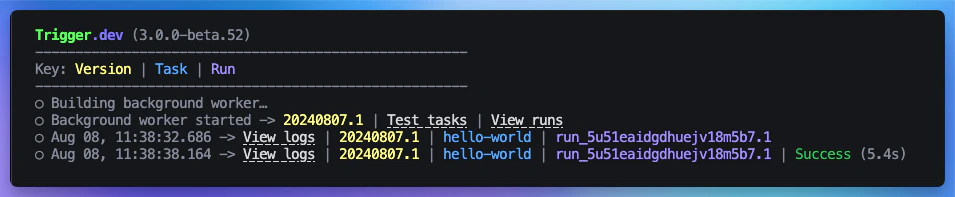
The CLI 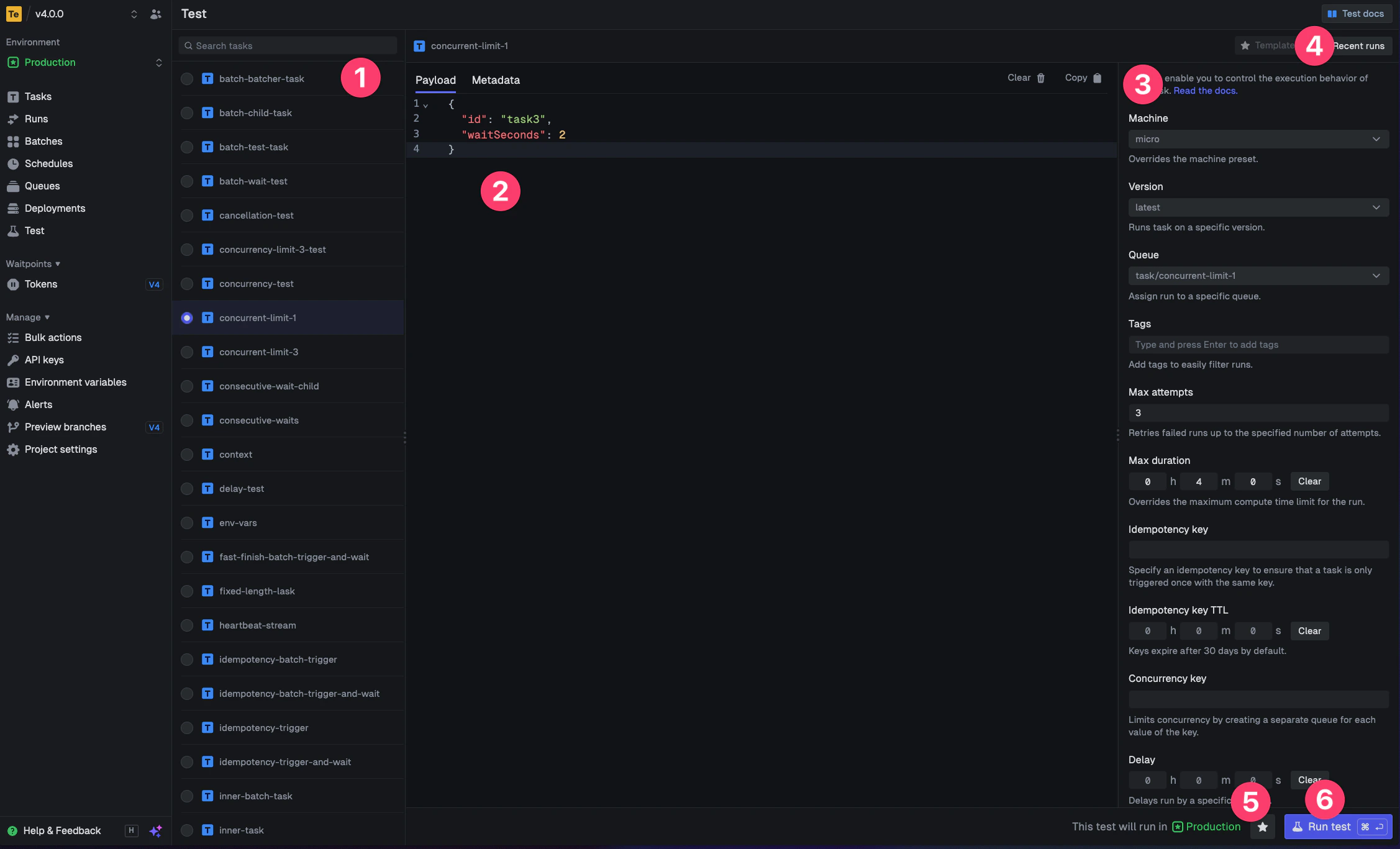
dev command spits out various useful URLs. Right now we want to visit the Test page.You should see our Example task in the list , select it. Most tasks have a “payload” which you enter in the JSON editor , but our example task doesn’t need any input.You can configure options on the run , view recent payloads , and create run templates .Press the “Run test” button .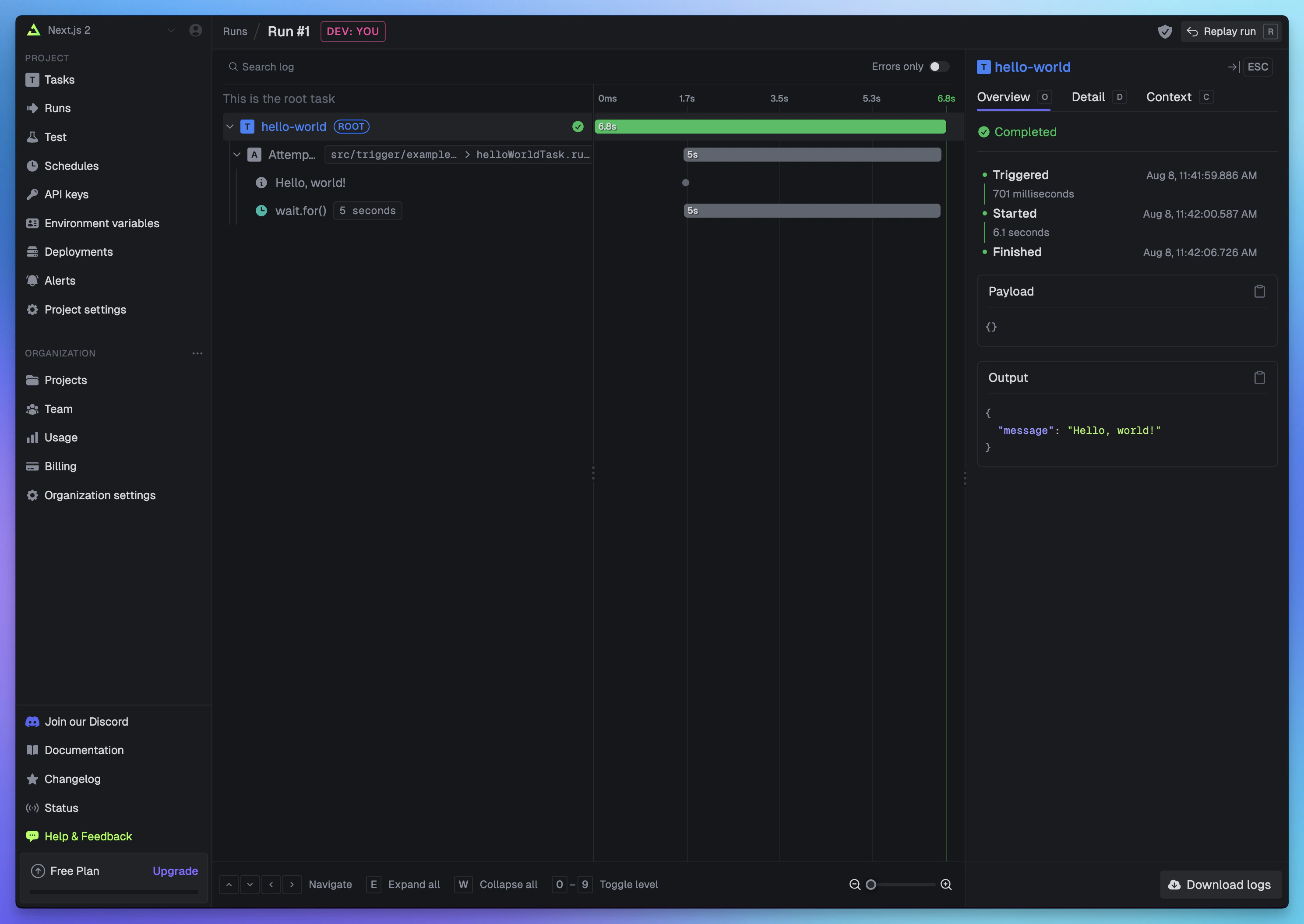
Triggering tasks from your app
The test page in the dashboard is great for verifying your task works. To trigger tasks from your own code, you’ll need to set theTRIGGER_SECRET_KEY environment variable. Grab it from the API Keys page in the dashboard and add it to your .env file.
.env
Next steps
Building with AI
Build Trigger.dev projects using AI coding assistants
How to trigger your tasks
Trigger tasks from your backend code
Writing tasks
Task options, lifecycle hooks, retries, and queues
Guides and example projects
Framework guides and working example repos